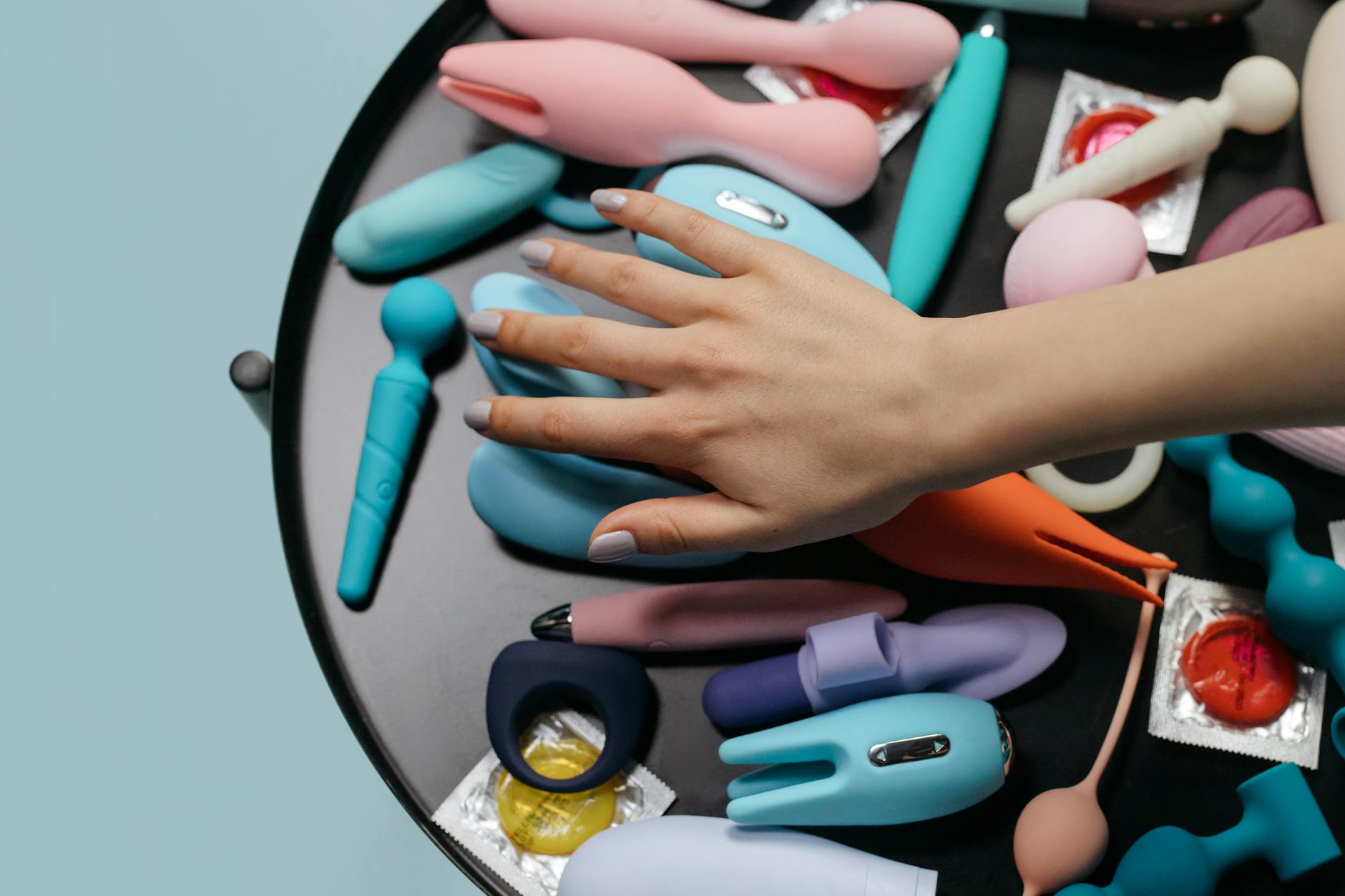
Let's be real about antidepressants and sex
Antidepressants save lives. They also numb arousal, flatten desire, and make orgasm feel like chasing a moving target. Most people don't talk about this side effect until it's already tangled into their relationship, their self-image, or both. The guilt follows: "I should be grateful I'm not depressed anymore. Why am I upset about not being able to come?"
You can be grateful and frustrated at the same time. Both are real.
SSRIs and SNRIs work by keeping serotonin in circulation. That same mechanism that lifts mood also dampens the neural cascade that leads to arousal and orgasm. It's not a personal failing. It's neurochemistry. The good news: you have actual tools to work with, and a lemon vibrator is one of the most effective ones.
How antidepressants change physical response
Three main things happen when you're on SSRIs or SNRIs:
Delayed arousal. Your body takes longer to respond to touch. Where you might have felt a tingle in 30 seconds, now it takes 5 minutes. Or 15. Or you feel almost nothing until you engage a more direct form of stimulation.
Reduced lubrication. Serotonin affects blood flow to genitals. Less blood flow means less engorgement, which means less natural lubrication. This creates friction that can feel uncomfortable instead of pleasurable.
Flattened sensation at the point of contact. Your nerve endings aren't dead. The signal is still traveling. But it arrives dulled, like trying to hear a conversation through a thick wall. This is why standard vibrators often feel disappointing. They're designed for baseline sensitivity. You're running on a bandwidth reduction.
Difficulty reaching the threshold. Even after arousal builds, getting to orgasm feels like pushing uphill. You might get to 80 percent and plateau. Frustration sets in. You give up. The next time, you're already tired before you start.
Here's what doesn't change: your brain's capacity for pleasure, your desire to feel good, or your ability to come at all. You're not broken. You're working with different hardware.
Why lemon vibrators work better when you're on antidepressants
Most standard vibrators rely on oscillating vibration. They shake back and forth at high speed. For someone with dampened sensation, this creates fatigue without intensity. It's like turning up the volume on white noise.
Air-suction clitoral vibrators like Lemon Vibrator work differently. They use gentle suction combined with pulsing air patterns. Instead of battling desensitized nerve endings with pure speed, they create a sensation your body can actually register. It's closer to the oral suction that tends to work well for people on antidepressants.
The mechanism matters because:
Suction creates a broader, more diffuse sensation rather than point-focused vibration. This covers a wider nerve distribution, which means even if individual nerve endings are firing weakly, the cumulative signal is strong enough to register. It's the difference between one spotlight and ten.
The pulsing patterns on a lemon vibrator can be ramped up without creating the fatiguing burn of high-speed buzzing. You get intensity without exhaustion.
Suction isn't as easy to adapt to desensitization. Oscillating vibration loses its "kick" after about 10 minutes of steady use on dulled nerve endings. Suction patterns stay engaging longer because they're rhythmic in a different way. Your body doesn't habituate as quickly.
The timing strategy that actually works
When you're on an SSRI or SNRI, timing is half the battle. Here's what I tell my clients:
Use your medication window. Most SSRIs hit peak plasma levels 4-6 hours after you take them. Use the hours right after, when the dose is metabolizing but not yet at full effect, for solo exploration. Many people report better sensation in that window.
Give yourself 20-30 minutes of warm-up. Your body isn't wired for quick arousal right now. Build it slowly. This means foreplay, fantasy, audio, erotica, or solo exploration without pressure. The goal isn't orgasm yet. It's getting your nervous system engaged.
Reduce external pressure. Set aside time when you're not rushing, you're not worried about a partner waiting, and you're not clock-watching. When arousal is already blunted, performance anxiety makes everything worse. Remove that variable.
Use lube, even if you think you don't need it. Antidepressants reduce natural lubrication. Water-based lube isn't a failure. It's a tool. It reduces friction, which means more sensation makes it through to your nerves instead of being eaten by chafing.
How to use a Lemon Vibrator on antidepressants
Start low, go slow. This isn't a hint. It's a real instruction.
Begin on the lowest suction level and a simple pattern. Spend at least 2-3 minutes exploring what that feels like. Your dulled sensation means you might not register a jump to level 3 as "more" right away. Give your nervous system time to register what's happening.
Once you feel the suction clearly, you can adjust intensity. Many people find that levels 2-4 on a lemon vibrator produce more orgasm-friendly sensation than jumping straight to maximum. Steady intensity with patterns often works better than raw power.
Expect a longer path to orgasm. When you're on SSRIs, "quick" sessions rarely work. Budget 15-25 minutes. Some people need longer. This isn't unusual. It's not a problem. It's just the timeline now.
Consider combining methods. Solo use of a lemon vibrator might get you 90 percent of the way there. Adding a partner's touch, dirty talk, or fantasy in that final push might be what closes the gap. You're not failing at using the vibrator alone. You're actually succeeding at building a multi-layered approach.
If you're partnered, hand the vibrator over sometimes. A partner using a lemon vibrator on you can adjust intensity in real time based on your breathing and responses. That responsiveness often helps bridge the arousal gap that antidepressants create.
Talking to your doctor about this
If your antidepressant is destroying your sexual function, that's a legitimate clinical conversation. You have options.
Some people benefit from timing their sexual activity to coincide with the lowest point in their medication cycle, which a psychiatrist can help you calculate. Others switch to a different SSRI or add a medication that counteracts sexual side effects (like bupropion or buspirone) without sacrificing mental health.
The worst outcome is suffering silently and assuming it's just how things have to be. It's not.
A good prescriber will ask about sexual side effects. If yours doesn't, bring it up. You're not being vain. Sexual function is part of overall quality of life. It matters.
The mental piece
Here's something antidepressants don't advertise: the emotional flattening often makes pleasure feel less rewarding. Even when you do orgasm, it might feel muted emotionally. That's not just about sensation. That's your reward circuitry running through the same neurochemistry your antidepressant is managing.
This is worth knowing because it means that sometimes the issue isn't mechanical. It's that your brain isn't registering pleasure the same way it used to. A lemon vibrator can't fix that alone, but combining it with how to use a lemon vibrator when you have anxiety or nervous system dysregulation can help you rebuild that connection slowly.
Giving yourself permission to enjoy what you do feel, even if it's less intense than before, is part of the reclamation. You're not chasing the old experience. You're building a new one that works with your current nervous system.
People also ask
Can I switch antidepressants to fix sexual side effects?
Maybe. Different SSRIs and SNRIs have different sexual side effect profiles. Sertraline and paroxetine tend to have higher rates. Bupropion and some others have lower rates. But switching isn't always the right call, because the medication that's managing your depression might be irreplaceable. A psychiatrist can discuss alternatives, but don't make this change on your own. The mental health benefit often outweighs the sexual side effect, and the goal is finding balance, not sacrificing one for the other.
How long does it take to adjust to sexual changes on antidepressants?
The sexual side effects usually appear within the first 1-2 weeks and can stabilize or improve slightly after 6-8 weeks as your body adjusts. But for many people, they persist as long as you're on the medication. That's not forever. You have working tools. A lemon vibrator specifically can help you work with what you have rather than waiting for your body to adapt on its own.
Is it safe to use a lemon vibrator while on antidepressants?
Yes. There's no drug interaction between SSRIs and silicone vibrators. The only caution is that some antidepressants can cause dizziness or fatigue, so make sure you're using your vibrator when you're alert and comfortable. Beyond that, it's safe.
Will a lemon vibrator actually help, or am I just avoiding the real problem?
A lemon vibrator is a tool, not a workaround. The real problem is that your medication is affecting arousal and orgasm. The vibrator doesn't fix that. But it does provide direct stimulation in a way that works better with medication-altered sensation. Think of it like using a hearing aid when you have hearing loss. The loss is real. The tool helps you function better with it. Both are true.
Can I use antidepressants and a lemon vibrator and still get better orgasms than before I started medication?
Yes, and many people do. Orgasm quality isn't just about intensity. It's about focus, comfort, and how much pleasure you can experience. Being stable on an antidepressant means you can actually be present for pleasure in a way depression might have prevented. A lemon vibrator designed for responsive sensation means you're not fighting numb nerve endings. Together, they can create a better sexual experience than you had while depressed, even if it's different than pre-medication.
What if a lemon vibrator doesn't work?
If you've given it real time (at least 3-4 sessions over a couple weeks) and nothing's shifted, talk to your doctor. Sometimes other factors are at play: dosage might need adjustment, there could be underlying pelvic floor tension, or a medication interaction you haven't identified. A clitoral vibrator is effective for most people, but it's not a universal fix. If it's not working, that's diagnostic information, not failure.
Moving forward
Antidepressants are necessary. So is pleasure. You don't have to choose. It takes some adjustment, some exploration, and permission to work with your body as it is now rather than as it was. A lemon vibrator is one of the best tools for that adjustment because it's designed to work with reduced sensation, not against it.
Give yourself real time with it. Adjust your expectations. Talk to your provider. And remember: numbness is a symptom you can address. It's not your new baseline.
If you're navigating medication side effects and relationship changes at the same time, how to use a lemon vibrator with partners who have different sensitivity levels covers strategies for keeping physical intimacy alive even when one partner's sensation has shifted.
You deserve pleasure. Antidepressants don't get to take that away completely. They just mean you need better tools and a little more intentionality. You've got both.