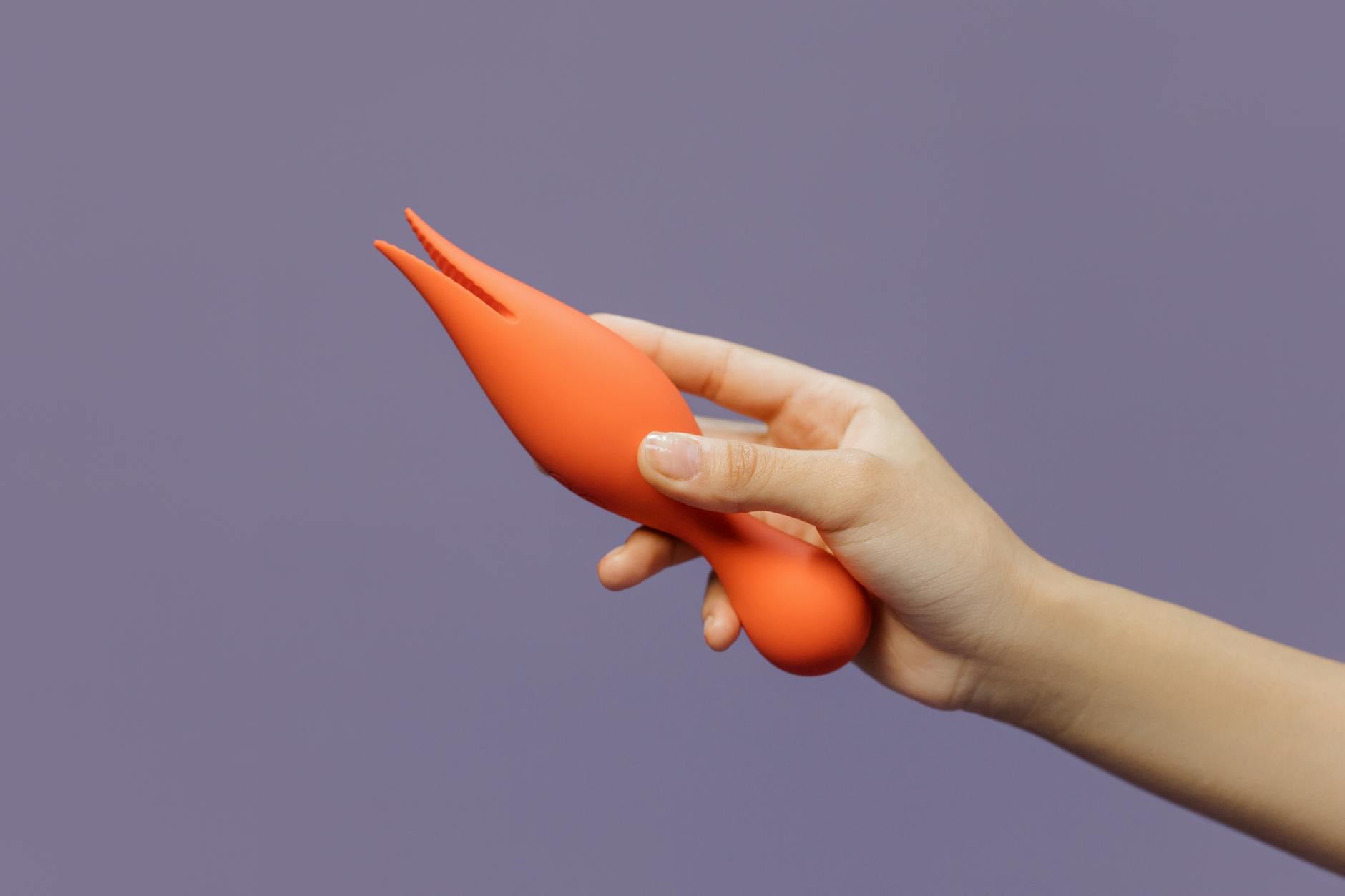
The thing nobody says out loud
You love your partner. The sex is good. But one of you finishes first, and then there's this weird liminal space where someone's still going and someone's... waiting. Or one of you needs clitoral stimulation to climax at all, while the other needs deep penetration and time. Or maybe you're both done at different times, and there's a brief moment of awkwardness before someone laughs it off.
This is not a failure of attraction or skill. It's just how bodies work.
Why orgasm timing is actually a partnership problem
Here's the thing: when orgasm timing is mismatched, it rarely stays a physical problem. It becomes emotional. The faster partner starts feeling guilty or bored. The slower partner feels pressured, which makes it even harder to climax. Both of you end up performing instead of connecting, and the whole experience gets smaller.
A lemon clitoral vibrator doesn't fix the underlying mismatch. But it creates a practical tool for building shared pleasure instead of taking turns. That shift matters more than you'd think.
What different orgasm needs actually look like
Let me be specific. Some common patterns:
The Speed Gap. One partner needs minimal stimulation and reaches orgasm quickly (sometimes under five minutes). The other requires 20-40 minutes of sustained arousal and the right rhythm. This is the most common scenario I see, and it's also the one that feels most fixable.
The Stimulation Gap. One partner needs clitoral stimulation to orgasm, period. The other has never needed it, or comes exclusively from penetration. When these two come together, neither person knows how to calibrate.
The Consistency Gap. One partner orgasms reliably. The other's orgasms are unpredictable. Some days yes, some days no. This creates pressure that makes the problem worse.
The Arousal Gap. One person gets turned on by touch alone. The other needs mental engagement, fantasy, or context to feel anything. Different entry points into desire make synchronization feel impossible.
None of these gaps are pathological. They're just different wiring. But without a framework to navigate them, they feel like incompatibility.
Where a lemon vibrator changes the equation
A good clitoral vibrator (especially an air-suction design like the Lem) does two things: it accelerates clitoral arousal and it removes the job of manual stimulation from whoever was providing it. That sounds technical, but the actual effect is emotional.
When one partner is using a lemon vibrator on themselves, the other partner is freed up. They're not trying to coordinate hand placement while also maintaining penetration or their own arousal. They can focus on what actually turns them on, which is usually the partner themselves, not the logistics of stimulation.
This is huge for couples where the slower partner needs the vibrator to climax on the timeline the faster partner prefers. Instead of "you need to take 30 minutes and I'll be bored," it becomes "you use the vibrator while I'm inside/touching you, and we can both focus on what feels good right now."
The conversation you need to have first
Before you bring a vibrator into couple's sex, you have to talk about why you want it. Not in a clinical way. Just honest.
"I want us to find something that works for both of us" is different from "I'm tired of waiting." The first one invites collaboration. The second one lands as criticism, even if you don't mean it that way.
If the conversation feels scary, start smaller. Ask your partner what they've been thinking about. Usually, they've been thinking about the timing gap too. They just didn't want to be the one to bring it up.
Once you're both talking about it, the vibrator is just a tool. It's the conversation that matters.
Practical timings for different scenarios
Let's say one partner needs 30 minutes and the other needs 5. Here are some ways to structure it:
Parallel play. Both of you are aroused and engaged. The faster partner uses the vibrator on themselves or receives oral or penetration from their partner, while the slower partner continues building toward orgasm through whatever method works for them. The Lem works beautifully here because it's hands-free (suction, not hand-operated), so both partners can stay present with each other.
Sequential with overlap. The slower partner starts with the vibrator while the faster partner engages with them. Once the faster partner reaches orgasm, they can focus entirely on their partner's pleasure without the pressure to keep going. This actually intensifies everything for the slower partner because they know their partner is fully present now.
Warm-up phase. The faster partner uses the vibrator during foreplay to get the slower partner's arousal started before penetration happens. This buys everyone time. If you can get 10 minutes of arousal in before penetration, the timing gap shrinks dramatically.
Solo first, together second. Some couples find it helpful for the faster partner to have an orgasm on their own (alone or while the other partner is engaged in foreplay) before they connect. This removes the pressure entirely. Then they can genuinely focus on their partner's pleasure.
None of these is the "right" way. The right way is whatever you both actually want and can talk about without shame.
The arousal gap and clitoral stimulation
If the mismatch is that one of you needs clitoral stimulation and the other doesn't, a lemon vibrator solves something concrete: it means you're not negotiating whose pleasure comes first.
For partners who don't climax from penetration alone, the vibrator is often the difference between "I can maybe come if I'm lucky and he's willing to do the thing" and "I consistently come, and I'm not dependent on someone else's hand getting tired."
This shifts the dynamic from performative sex to collaborative sex. You're both working toward both orgasms instead of one person accommodating the other.
If your partner has never needed clitoral stimulation but you do, here's what I'd say: introducing the Lem isn't admitting you're broken. It's saying "this is what my body needs, and I want us to find a way to do this together."
What not to do
A vibrator is not a fix for lack of communication. If you bring one in to avoid talking about the actual problem, it'll become a Band-Aid on a wound that doesn't heal.
Don't introduce it mid-sex the first time. That's surprising in a way that reads as criticism, even if you mean it kindly. Talk about it first. Warm up to the idea.
Don't position it as "this will make you orgasm faster," unless your partner explicitly wants to. What you actually want is "this will let us both enjoy ourselves without pressure," which is a different goal entirely.
Don't expect it to fix attraction or desire. A vibrator changes logistics. It doesn't create a spark that isn't there.
The deeper thing that changes
Here's what I've noticed: when couples find a way to navigate different orgasm needs that feels collaborative instead of frustrating, they start feeling more connected in the rest of their life too. Not because the sex is better (though it often is). But because they've had a conversation that required vulnerability and honesty, and they've found a solution together.
That's the actual skill. The vibrator is just the catalyst.
If your partner's arousal style or orgasm timeline is different from yours, a clitoral vibrator can help. But the real work is the conversation. Get curious about what your partner actually wants. Ask questions. Listen for the places where they're holding back because they don't want to make demands. That's where the real disconnection usually lives.
People also ask
Can using a vibrator during partnered sex reduce intimacy or create distance?
Not if it's something you both wanted. In fact, couples who introduce vibrators together often report feeling more connected, not less. The distance usually comes from avoidance of the conversation, not from the tool itself. Once you've talked openly about what you both need, the vibrator becomes evidence of collaboration, not avoidance.
What if one partner feels threatened or insecure about introducing a vibrator?
That feeling is worth taking seriously. Usually it's not about the vibrator. It's about what the vibrator represents: admission that something isn't working, or fear that they're not enough. Start by asking what's actually scary about it. Often it's a fear of judgment or failure. Once you separate the vibrator from the shame, the threat usually shrinks.
How do we use a lemon vibrator if one partner has significantly lower libido?
A vibrator doesn't fix desire mismatch. What it can do is remove friction from the times you do connect. If one partner has lower libido, using the Lem might make those encounters feel less pressured and goal-oriented. But the real conversation is about why the desire gap exists and whether it's worth exploring with a therapist. Some gaps are just compatibility. Some are worth working through.
Does using a clitoral vibrator together take away from penetration or partnered sensation?
Not necessarily. Many couples use a vibrator alongside penetration, oral sex, or other forms of touch. The clitoral stimulation happens in parallel with whatever else you're doing. You're not replacing one thing with another. You're adding a tool that helps both partners finish in a way that feels good.
Should we use a vibrator every time we have sex if we have different orgasm timelines?
No. Use it when it serves what you actually want. Some nights you might want to take time and focus on slow connection. Other nights you might want to use the Lem and move toward climax together more quickly. Different sessions can have different goals. The vibrator is an option, not a requirement.
What if my partner orgasms too quickly and feels embarrassed about it?
Separate the embarrassment from the physiology. Quick orgasm isn't failure. It's just how their nervous system responds to arousal. The shame usually comes from cultural messages that men should "last longer" or that their partners should be satisfied by penetration alone. Neither of those things is true. Once the shame is gone, the actual problem often feels solvable. Maybe you use the vibrator while they rest. Maybe you connect again in a few minutes. Maybe you redefine what sex means so it includes multiple rounds or different types of touch. The solution matters less than the conversation.